
The countertop, a key element in the kitchen where many daily tasks are carried out, such as cooking, eating or conversing.
For this reason it is important that the height of our kitchen countertop It should be ideal for working comfortably and ergonomically, but what is the ideal kitchen height? Let's find out.

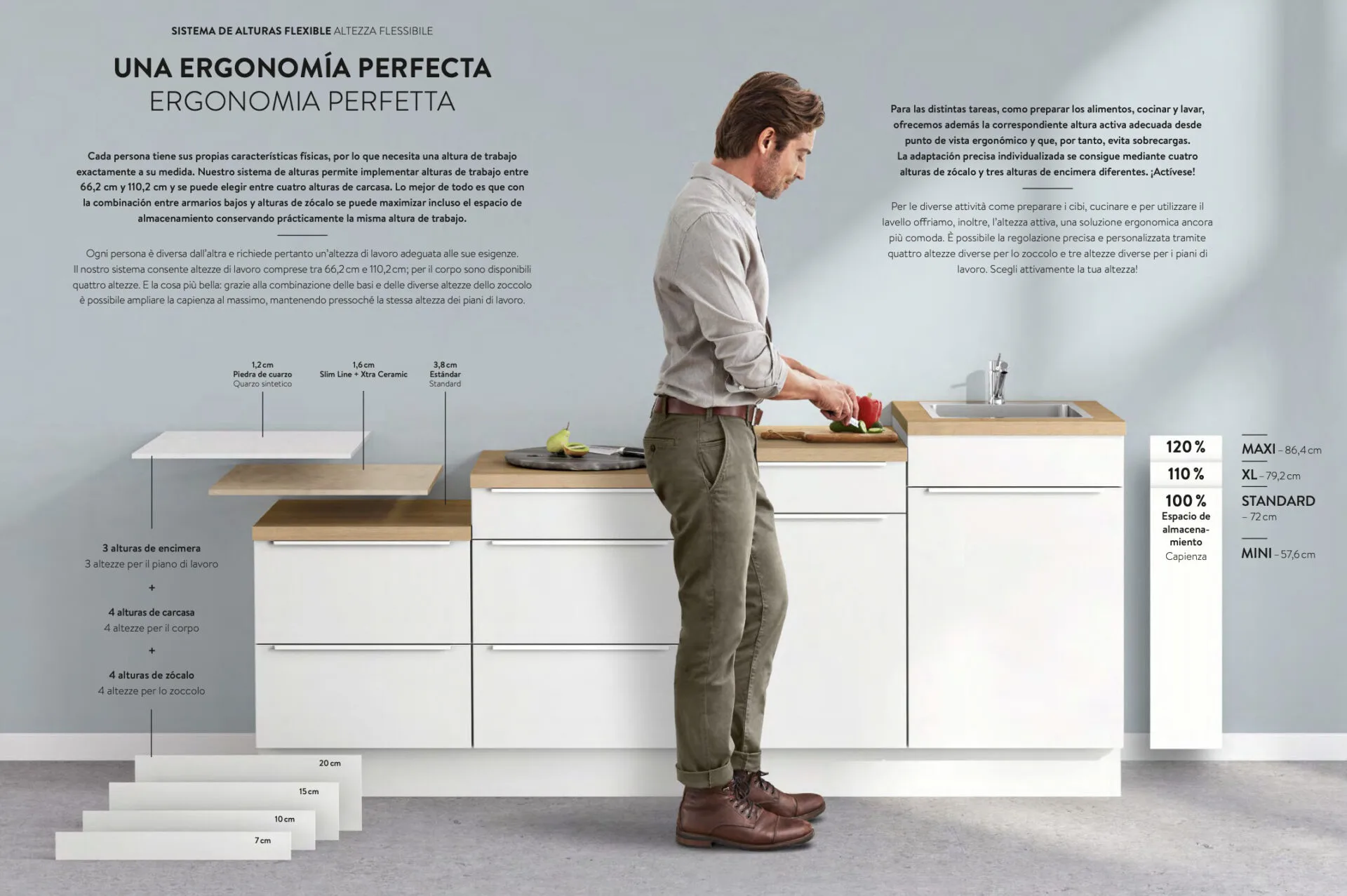
The ideal height of a kitchen countertop It is usually between 85 cm and 95 cm, depending on the height of the person who will use it most often.
A general rule is that the countertop should be approximately at hip level or slightly below of the elbow when the user is standing and relaxed. For greater accuracy:
The height of the countertop will also influence the position of the sockets, countertops, or other items tall furnitureTherefore, indirectly, the height of the countertop will influence the kitchen furniture measurementseven in the height of the stools.
The depth of a kitchen countertop, that is, the measurement from the front to the back wall, is a key factor in ergonomic design. It directly affects the comfort, accessibility, and functionality of the workspace.
This measurement is considered standard in most residential kitchens for several practical and ergonomic reasons:
It allows for seamless integration with low furniture, which usually has a 60 cm deepwhich facilitates the installation of integrated appliances such as ovens, dishwashers and integrated refrigerators.
The reach of an average person along a flat countertop, without uncomfortably stretching, is about 55–60 cmThis depth ensures that you can work comfortably, clean easily, and reach sockets, utensils, or spices placed at the bottom without excessive effort.
Also reserve a usable space in the back of the countertop (about 5–10 cm) to install sockets, lighting or a small channel for accessories (spice racks, knife holders, etc.) without sacrificing work surface.
When space allows, expand the countertop depth between 65 and 70 cm It can offer clear advantages:
More usable work surfacewhich is especially valuable if the kitchen is the heart of the home or if you often cook as a couple or family.
Increase the safety distance between the cooking area and the edge, preventing pots or pans from sticking out.
Although it gains depth, this measure is still within the ergonomic range of extended armTherefore, it remains comfortable for most people (even for shorter statures).
It facilitates the design of less intrusive tall cabinets, since a deeper countertop allows them to be placed a little higher and further back without losing accessibility.
Exceeding 70 cm in depth is only recommended in certain configurations:
Islands or peninsulaswhere access is from both sides. In these cases, a 80–90 cm countertop It is common, especially if it includes a bar area or lower storage.
Kitchens without upper wall cabinetsSince a very deep countertop with upper cabinets can make them out of reach, creating an uncomfortable or even dangerous experience when trying to access them.


