
The choice of the height of kitchen cabinets It is a determining factor for the functionality, ergonomics, and overall aesthetics of this important space in the home. It's not just about aesthetics, but about ensuring that every element is at the right height for make daily tasks easierfrom food preparation to storage.
A well-distributed kitchen, where the height of each piece of furniture has been carefully considered, translates into greater comfort, efficiency and security For those who use it. In this guide, we'll break down standard heights and key considerations for designing or remodeling your kitchen.

When planning your kitchen, the standard measurements Furniture dimensions are a crucial starting point. These measurements are designed to accommodate most users and facilitate interaction with appliances and the work area. Knowing these measurements will allow you to make informed decisions, whether you are designing a kitchen from scratch, buying modular furniture or planning a renovation.
The base cabinets and countertop constitute the main work area in the kitchen. Their height is crucial to ensure a comfortable posture when cooking, cutting, and handling food.
The standard height of base kitchen cabinets, measured from the floor to the top of the plinth, is usually 85 cmHowever, the total height, including the countertop, is what truly defines the work surface.
The most common standard height for the kitchen countertopOnce installed on the low cabinets, it is 90-92 cm From the floor. This measurement is ideal for most people, allowing them to work standing up with their back relatively straight and their elbows forming an approximate 90-degree angle. This height is considered ergonomic for food preparation.
Yes ok 90-92 cm This is the norm, but the ideal height may vary depending on the height of the main users of the kitchen.
In kitchens where several people of very different heights will be working, a work area with a differentiated height can be considered, such as a kitchen bar or a work island of a specific height. It is also important to consider the height of integrated appliances, such as the oven or dishwasher, to ensure comfortable use kitchen countertop height It is a crucial ergonomic factor.
Wall cabinets play a crucial role in storage and optimizing vertical space. Their height and distance from the countertop must be carefully calculated to facilitate access and visibility.
The height of tall furniture varies considerably depending on the design and storage needs. The most common heights are 60 cm, 72 cm and 90 cmAlthough larger or smaller sizes are possible, the most important factor is the proportion relative to the lower furniture and the overall height of the room height of the lower kitchen cabinets Well thought out, they make the most of the space without visually overloading it.
The standard distance between the countertop and the bottom edge of the wall cabinets is usually 50-60 cmThis separation is vital for:
In kitchens with very high ceilings, this distance can be increased slightly or taller cabinets can be used to make the most of the vertical space.
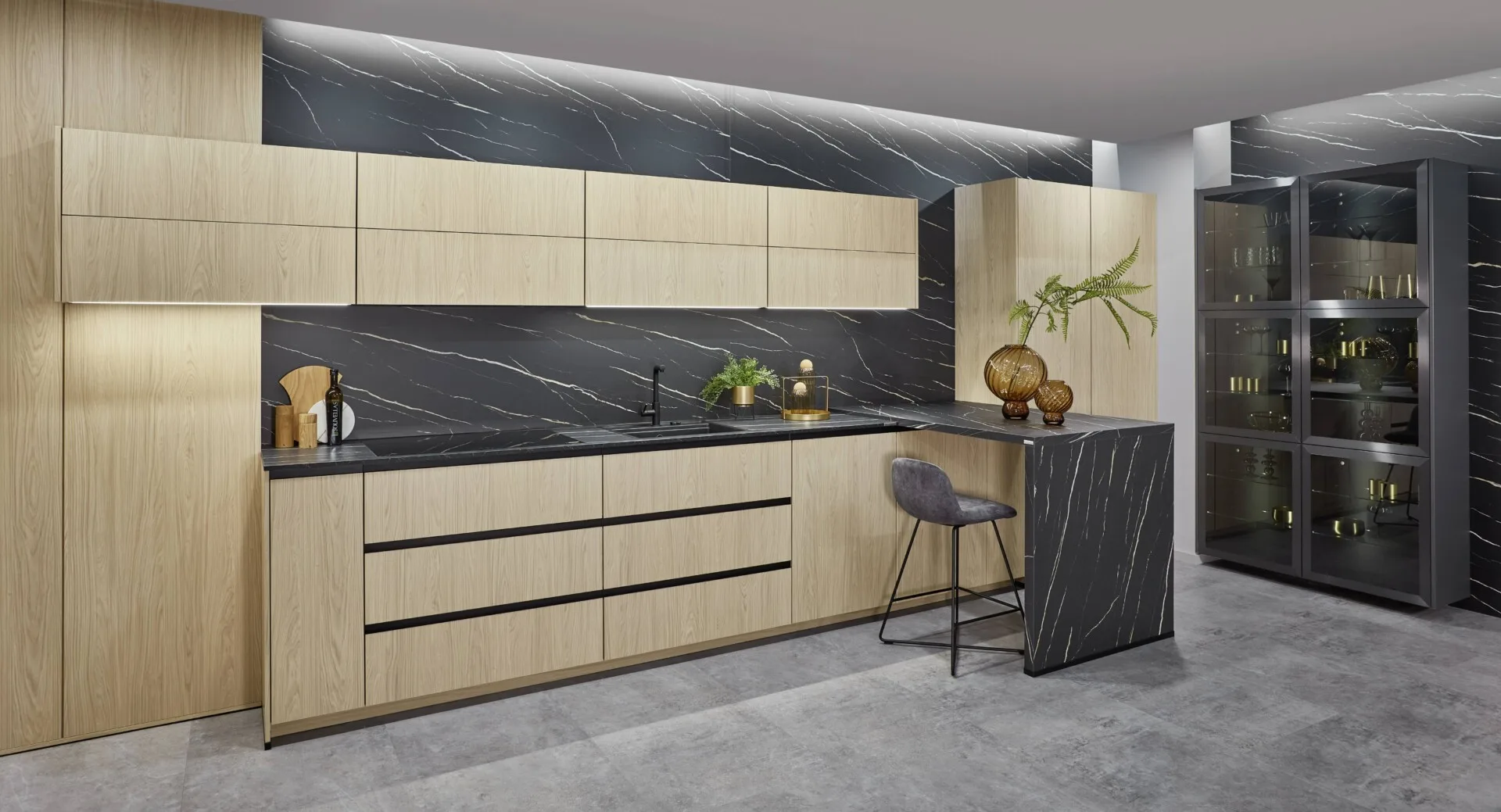
The columns, also known as tall vertical or high-rise cabinets, are used to integrate appliances such as ovens and microwaves, or to maximize storage space.
The height of the columns can vary enormously, from floor to almost ceiling. The most common measurements are usually 200 cm, 215 cm or 230 cmbut they adapt to the available space and the overall design. They are often integrated with wall cabinets to create a continuous visual line Kitchen integration with column It is fundamental for a harmonious design.
When ovens and microwaves are integrated into tall units, the height of these appliances is crucial. The main oven is usually placed at a height that allows easy access to its interior, often between 40 and 70 cm from the floor, to avoid bending over. The microwave can be placed above the oven or in a more accessible position depending on its intended use. The correct placement of appliances in columns, as seen in the designs of large modern kitchens, optimizes ergonomics.
Beyond standard measurements, there are other factors and trends to consider when defining the height of your kitchen cabinets.
The plinths, which cover the bottom part of low furniture, are usually a height of 10 to 15 cmThey reduce the visible space under furniture, facilitate cleaning, and protect against dirt and moisture.
In modern kitchens, especially those with handleless opening systems like the system Gola or Unero With push-to-open systems, the height and continuity of the furniture lines become even more important. The absence of handles can make furniture appear taller and cleaner, enhancing the feeling of spaciousness. These are characteristics of handleless kitchens.
Countertop materials like Silestone, Neolith, or porcelain vary in thickness, which also affects the overall height of the work surface. A greater thickness may require adjusting the height of the base cabinets to maintain the desired overall height. When choosing materials for kitchen countertopsIt also considers its impact on the total height, such as the porcelain countertops.
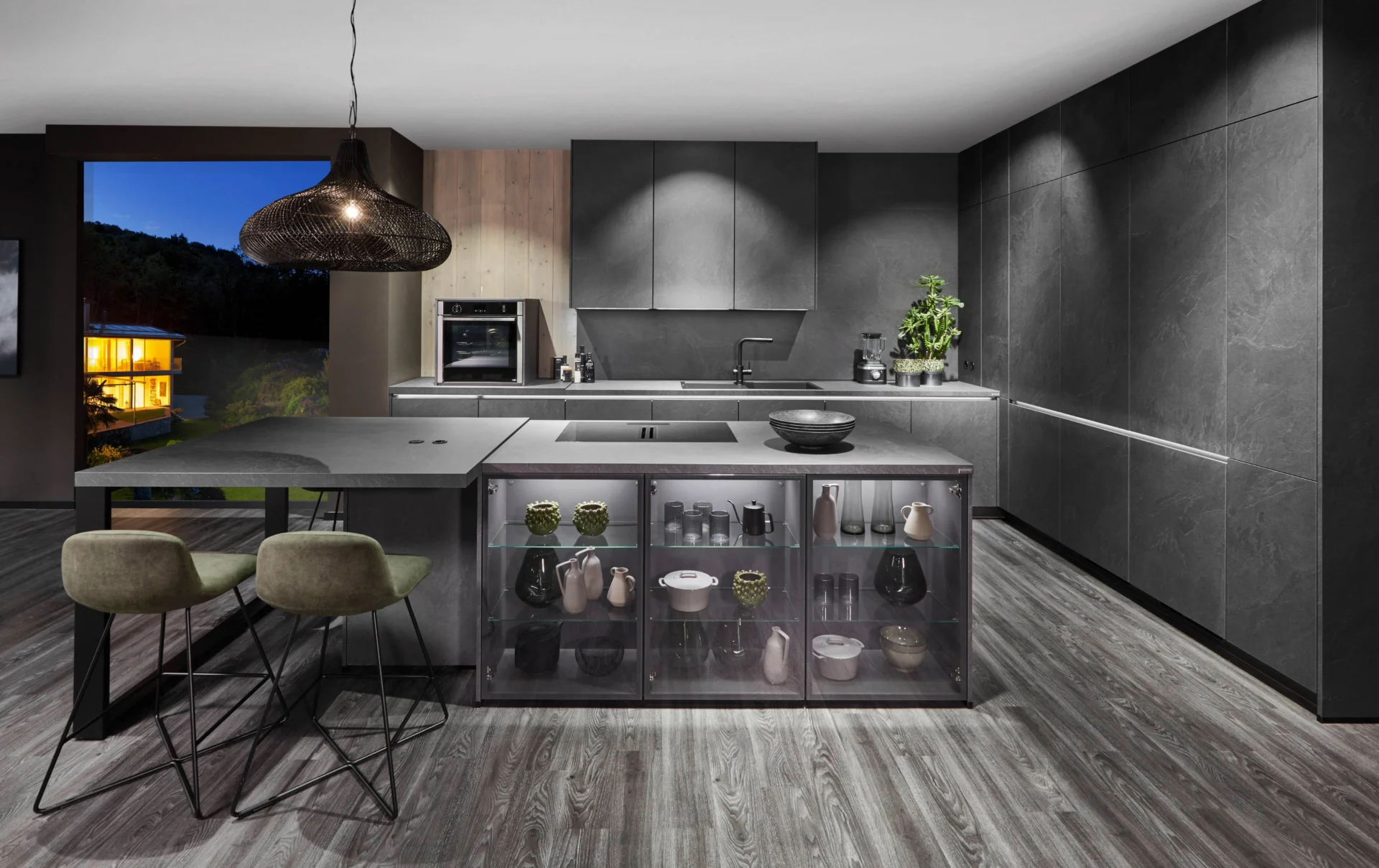
The distribution of heights should be integrated into the overall design of the kitchen, creating harmony and functionality.
In these layouts, consistency in the height of low and high furniture, and the distance between them, is fundamental to creating a logical and visually pleasing workflow corner kitchenFor example, it requires careful planning to maximize access to corners.
Kitchen islands and breakfast bars can vary in height. An island can incorporate a work area at the standard height (90-92 cm) and a bar or dining area at a higher height (around 105-115 cm) for use with bar stools American bars They are an excellent example of how to integrate different heights for different functions ideal dimensions for a kitchen island They consider these variations in height.
In small modern kitchensOptimizing vertical space is key. Using tall cabinets that reach the ceiling can maximize storage, but it's important to ensure they are accessible (perhaps with stools or designer ladders). Choosing light colors and minimalist designs can also make a kitchen feel more spacious, regardless of the specific heights of the cabinets layout of an elongated kitchen It also benefits from proper height management.
The standard height of the low cabinet is 85 cm, resulting in a total countertop height of 90-92 cm.
The height of tall furniture varies, being common 60 cm, 72 cm and 90 cmThe distance to the countertop is usually 50-60 cm.
Yes, it's entirely possible to customize the height of base and wall cabinets to suit your ergonomic needs and the available space. This is more common in custom-made kitchens.
The height of kitchen cabinets It's much more than a simple measurement; it's an essential component of ergonomics and functionality. By considering standard heights, individual user needs, and design trends, you can create a kitchen that is not only aesthetically pleasing but also a pleasure to work in. Whether you're looking for a more modern and minimalist kitchen, like the black and wood designer kitchensor a warmer, more welcoming one like the cozy and warm kitchensPaying attention to the correct dimensions will ensure maximum comfort and efficiency. Invest time in planning the right heights and enjoy a kitchen designed just for you!
Plan your ideal kitchen down to the last centimeter: The perfect height makes all the difference!


